
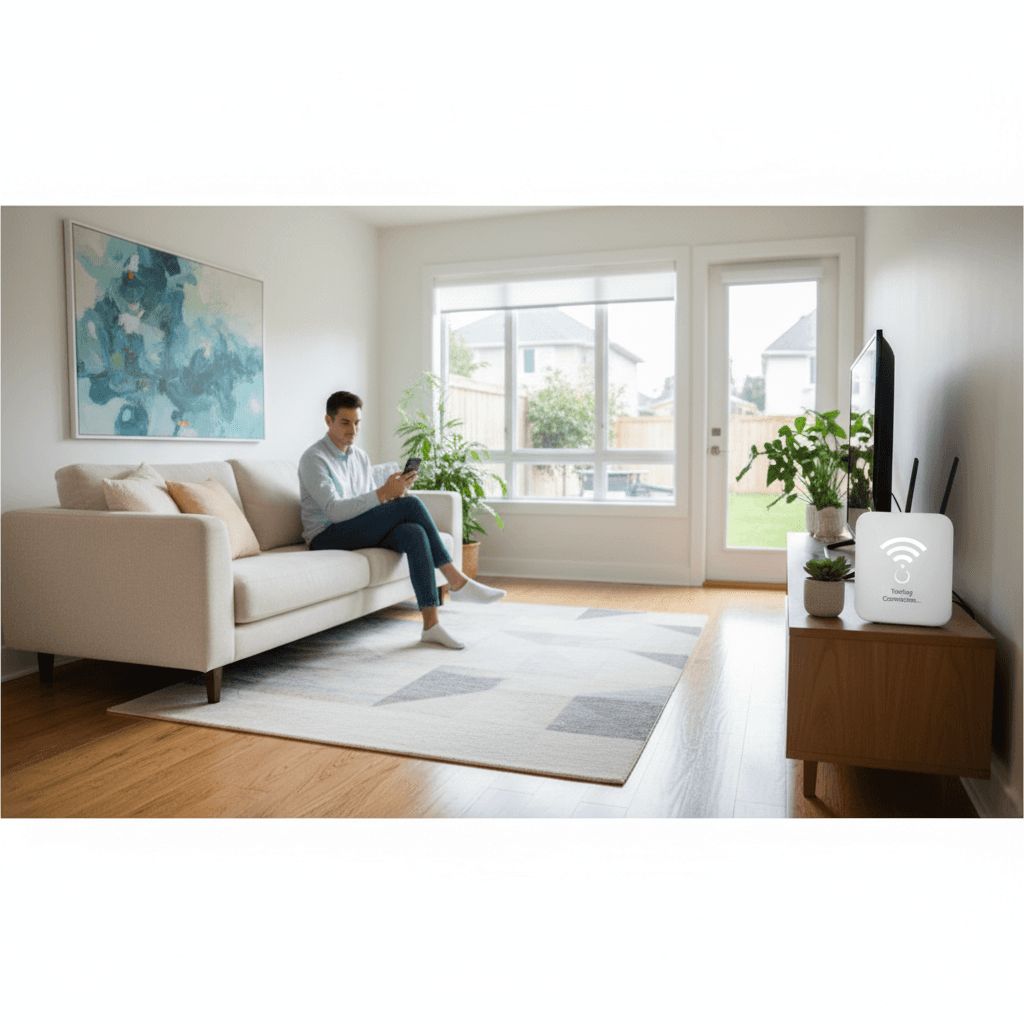
How to Fix Slow Wi-Fi Even with a Fast Internet Plan
Your internet plan is fast, but your Wi-Fi is slow - here's how to fix the bottleneck between your router and devices.
What's Happening
You're paying for 300 Mbps (or more), but when you run a speed test on Wi-Fi, you're getting 30 Mbps or less. Meanwhile, devices connected with an Ethernet cable get the full speed. This is incredibly frustrating because you're not getting what you're paying for. The good news? The problem is almost always your router or Wi-Fi settings, not your internet plan itself.
Quick Checks (Do These First)
- Run a speed test while standing next to your router. If speed is good there but bad elsewhere, it's a coverage problem.
- Check which Wi-Fi band you're using. Are you on 2.4 GHz or 5 GHz? Your phone settings will show this.
- Count how many devices are connected. Open your router admin page to see the device list.
- Look at your router's age. If it's more than 4-5 years old, it might not support your current speeds.
- Restart your router. Unplug for 30 seconds, plug back in, wait 2 minutes, test again.
Step-by-Step Fixes
Fix 1: Switch to the 5 GHz Band
The 5 GHz band is much faster than 2.4 GHz but has shorter range. Most modern routers broadcast both bands.
- On your device, go to Wi-Fi settings
- Look for your network name with "-5G" or "5GHz" at the end
- Connect to that network instead of the regular one
- Run a speed test - you should see a significant improvement
If you don't see a separate 5 GHz network, you may need to enable it in your router settings (see Fix 3).
Fix 2: Position Your Router Properly
Router placement has a huge impact on Wi-Fi speed. Many people hide their router in a closet or behind furniture, which kills the signal.
- Move your router to a central location in your home
- Place it on a shelf or desk, not on the floor
- Keep it away from thick walls, metal objects, and appliances
- If it has external antennas, position one vertically and one horizontally
- Run speed tests from different rooms to verify improvement
Fix 3: Change Your Wi-Fi Channel
Your router shares airspace with neighbors' routers. If everyone is on the same channel, speeds suffer.
- Download a Wi-Fi analyzer app (like WiFi Analyzer for Android or WiFi Explorer Lite for Mac)
- Run the app to see which channels are crowded
- Access your router admin page (usually
192.168.1.1or192.168.0.1in a browser) - Log in (check the sticker on your router for credentials)
- Find Wireless Settings > Channel
- For 2.4 GHz, choose channel 1, 6, or 11 (whichever is least crowded)
- For 5 GHz, try channel 36, 40, 44, or 48
- Save settings and test your speed
Fix 4: Update Your Router's Firmware
Outdated firmware can cause performance issues and security vulnerabilities.
- Access your router admin page
- Look for Administration, Advanced, or Firmware Update
- Click Check for Updates
- If an update is available, click Update and wait (don't turn off the router during this process)
- Router will restart automatically
- Test your speeds after the update completes
Fix 5: Enable QoS (Quality of Service)
QoS helps prioritize important traffic so streaming or video calls don't get choked by downloads.
- Access your router admin page
- Find QoS or Quality of Service settings
- Enable QoS and select your internet speed
- Set priorities (Gaming/Streaming = High, Downloads = Low)
- Save and test performance during heavy use
If Nothing Worked
If you've tried all these fixes and Wi-Fi is still slow, your router may be outdated or incapable of handling your internet speeds. Look up your router model's specifications - if it only supports Wi-Fi 4 (802.11n) or older, it can't deliver speeds above 150-300 Mbps. Consider upgrading to a Wi-Fi 5 (802.11ac) or Wi-Fi 6 (802.11ax) router that matches your internet plan's speed.
When to Call a Pro
If you're not comfortable logging into your router settings, or if you've tried everything and still have slow speeds, it's time to get expert help. There might be interference issues, configuration problems, or you may need professional guidance on choosing the right router upgrade.
Need Professional Help?
If you're in the Tampa Bay area, Geeks in Sneaks provides friendly, on-site tech support in Clearwater, Clearwater Beach, and Dunedin. We can diagnose Wi-Fi issues, optimize your network, or recommend and install the right router for your needs.
Related Topics
Need Professional Help?
If you're still having trouble, our expert technicians can help.
Learn about our network repair serviceMore Router & WiFi Fixes
See all Router & WiFi fixes →Business-Grade vs Consumer Routers for Home Use
Considering a business-grade router for your home? Find out if the premium price delivers real benefits for residential use.
Buying Used or Refurbished Routers: Safe or Risky?
Tempted to save money with a used router? Learn the real security risks and when buying secondhand is safe versus when it's dangerous.
How Long Should a Router Last? When to Replace Yours
Your router is a few years old and you're wondering if it's time to replace it. Learn the typical lifespan and warning signs it's failing.
Gaming Routers: Real Benefits vs Marketing Hype
Wondering if a gaming router is worth the premium price? We separate the real performance benefits from marketing gimmicks.
Renting ISP Equipment vs Buying Your Own: Real Cost Comparison
Paying monthly rental fees for your modem and router? Find out how much you could save by buying your own equipment.
Matching Router Capabilities to Your Internet Speed Tier
Have gigabit internet but not getting those speeds? Your router might be the bottleneck. Learn how to match equipment to your plan.
What to Look for When Buying a Home Router in 2026
Shopping for a new router can be overwhelming with all the technical specs and marketing claims—here's what actually matters in 2026.
When to Move from Single Router to Mesh WiFi System
Dead zones and weak WiFi in parts of your home? Find out if it's time to upgrade from a traditional router to a mesh system.