
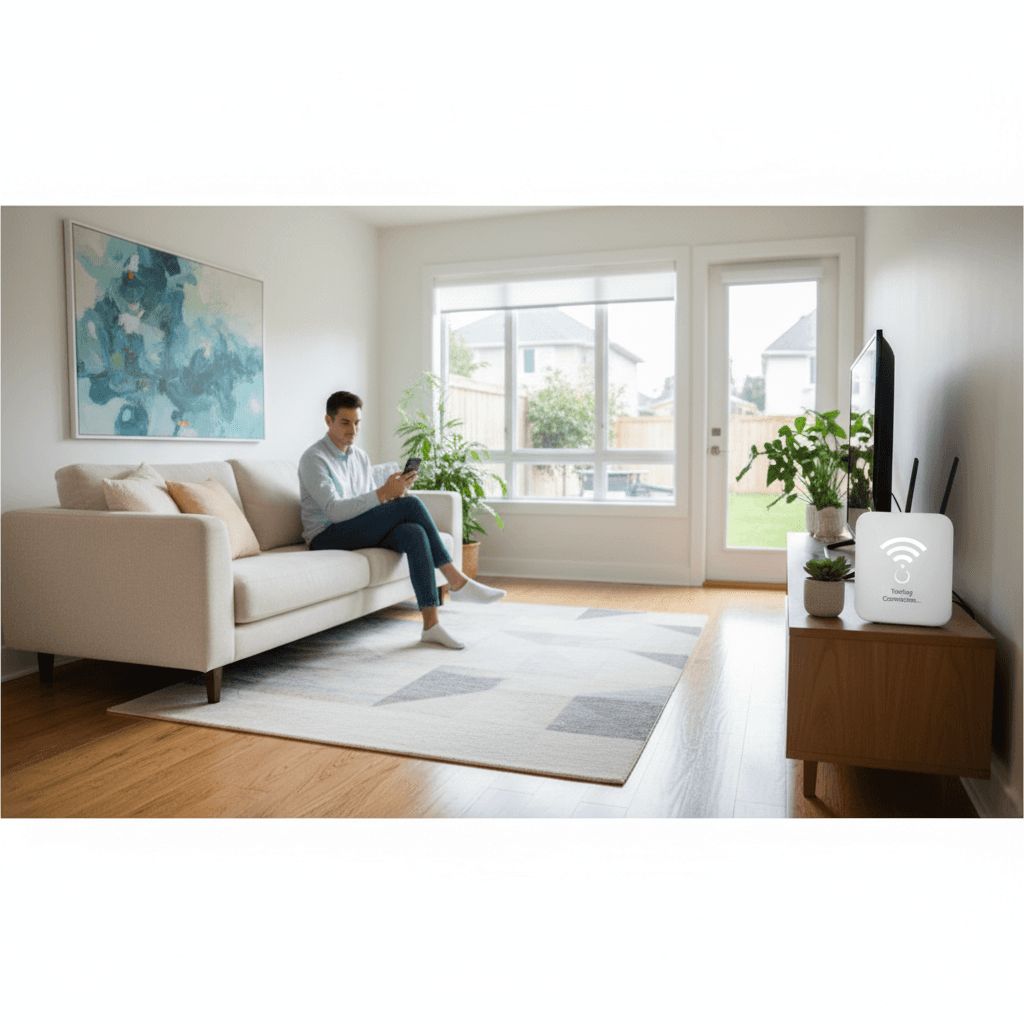
How to Fix: Internet Fine via Ethernet But Terrible on WiFi
Your wired connection is fast and stable, but WiFi is slow, drops frequently, or barely works - here's how to fix your WiFi performance issues.
What's Happening
When you plug in an Ethernet cable, everything works beautifully - fast downloads, smooth streaming, zero lag. But the moment you switch to WiFi, it's a different story: slow speeds, buffering videos, websites that won't load, or constant disconnections. This proves your internet connection is fine, and the problem is specifically with your WiFi setup, router placement, interference, or settings. The good news is that WiFi-specific problems are usually fixable without calling your ISP.
Quick Checks (Do These First)
- How far are you from the router? WiFi degrades with distance and walls. Try moving closer temporarily.
- Run a speed test on both. Test wired, then WiFi from the same spot to compare numbers.
- Check which WiFi band you're on. 5GHz is faster but shorter range; 2.4GHz is slower but reaches farther.
- Count connected devices. Too many devices can slow WiFi significantly (Ethernet isn't affected).
- Look for interference sources. Microwaves, cordless phones, baby monitors, and neighboring WiFi networks all interfere.
Step-by-Step Fixes
Fix 1: Optimize Router Placement
Router location dramatically affects WiFi performance but doesn't matter for Ethernet.
- Move your router to a central location in your home:
- Not in a corner, basement, or far edge of the house
- Not inside cabinets, closets, or behind furniture
- Not on the floor (WiFi spreads outward and down from the router)
- Place it:
- On a shelf or desk, 4-6 feet off the ground
- In an open area with good airflow
- Away from metal objects, mirrors, and aquariums (they block signals)
- At least 3 feet from other electronics (TVs, microwaves, speakers)
- Adjust antennas if your router has them:
- For one-story homes: Point them straight up
- For multi-story homes: Angle some at 45 degrees or horizontal
Test WiFi after moving the router. Placement alone can double your WiFi speeds.
Fix 2: Change WiFi Channel to Reduce Interference
Neighboring WiFi networks overlap and interfere, especially in apartments and dense neighborhoods.
- Download a WiFi analyzer app on your phone:
- Android: WiFi Analyzer (free)
- iPhone: Airport Utility or Network Analyzer
- Scan to see which channels are crowded
- Log into your router settings (usually 192.168.1.1)
- Go to Wireless Settings
- Change channels:
- For 2.4GHz: Use channels 1, 6, or 11 only (these don't overlap)
- For 5GHz: Try channels 36, 40, 44, 48, or anything showing less congestion
- Save and restart the router
- Test WiFi performance on the new channel
Fix 3: Switch Between 2.4GHz and 5GHz Bands
Using the wrong band for your situation causes poor performance.
When to use each:
- 2.4GHz: Better range, goes through walls, but slower and more interference
- 5GHz: Faster speeds, less interference, but shorter range and struggles with walls
- Log into router settings
- Make sure both 2.4GHz and 5GHz are enabled
- Give them different names (e.g., "MyHome_2.4" and "MyHome_5")
- Turn OFF Band Steering or Smart Connect
- Save and restart
- Connect to 5GHz when you're close to the router (same room or adjacent)
- Connect to 2.4GHz when you're farther away or on a different floor
Fix 4: Update Router Firmware
Outdated firmware can cause WiFi performance bugs that don't affect wired connections.
- Log into router admin page
- Look for Firmware Update, Router Update, or Administration
- Click Check for Updates
- If available, read release notes for WiFi performance improvements
- Click Update and wait patiently (5-10 minutes)
- Do NOT unplug the router during update
- After restart, test WiFi performance
Fix 5: Adjust Router WiFi Settings for Performance
Certain router settings can be optimized for better WiFi speed and stability.
- In router settings, go to Wireless Settings
- Adjust these settings:
- Channel Width:
- 2.4GHz: Set to 20MHz (more stable, less interference)
- 5GHz: Set to 80MHz (good balance of speed and range)
- Transmission Power: Set to High or 100%
- Beamforming: Enable if available (focuses signal toward devices)
- MU-MIMO: Enable if available (handles multiple devices better)
- QoS (Quality of Service): Enable and prioritize important devices/activities
- Channel Width:
- Save and test
Fix 6: Reduce WiFi Interference from Other Devices
Many household items interfere with WiFi but don't affect Ethernet.
- Identify interference sources:
- Microwaves: Interfere with 2.4GHz when running
- Cordless phones: Especially 2.4GHz models
- Baby monitors: Often use 2.4GHz
- Bluetooth devices: Can interfere with 2.4GHz
- Neighboring WiFi: Check with WiFi analyzer app
- Solutions:
- Move router away from microwave and cordless phone base
- Switch to 5GHz WiFi band (not affected by these devices)
- Replace old cordless phones with DECT 6.0 models (different frequency)
- Use 5GHz band on devices that support it
Fix 7: Limit Connected Devices or Upgrade Router
Too many WiFi devices can overwhelm your router, while Ethernet connections aren't affected.
- Check connected device count in router settings
- If you have 15+ devices:
- Disconnect devices you're not actively using
- Use Ethernet for stationary devices (desktop PCs, smart TVs, game consoles)
- Set up a guest network for IoT devices (smart home gadgets, cameras)
- Consider upgrading to a WiFi 6 router (handles more devices better)
- If your router is 5+ years old and you have 10+ devices, it's probably time to upgrade
Fix 8: Check for Router Overheating
Overheating affects WiFi performance before it affects wired connections.
- Feel your router - if it's very hot, that's a problem
- Improve ventilation:
- Remove it from enclosed spaces
- Don't stack other devices on top
- Clean dust from vents with compressed air
- Point a small fan at it if it runs consistently hot
- Monitor WiFi performance after cooling
Fix 9: Consider WiFi Extenders or Mesh System
If your home is large or has thick walls, a single router might not cover everything adequately.
- For homes over 2,000 sq ft or with multiple floors:
- WiFi Extenders: Budget option ($30-80), but can halve speeds
- Mesh WiFi System: Best option ($200-500), seamless coverage, no speed loss
- Place extenders or mesh nodes:
- Halfway between router and dead zones
- In open areas with good line-of-sight to router
- Not in corners or behind furniture
If Nothing Worked
If WiFi is still terrible after trying these fixes and you've confirmed Ethernet works perfectly, your router's WiFi hardware might be failing. This happens with older routers - the Ethernet ports work fine, but WiFi chips degrade. Try factory resetting the router one last time. If that doesn't help, it's time to replace it. Modern WiFi 6 routers (starting around $80) provide dramatically better performance, range, and device handling than routers from 5+ years ago.
When to Call a Pro
If WiFi problems are disrupting work or daily life, and you've spent hours troubleshooting, get professional help. A tech can analyze your WiFi with professional tools, identify interference sources, optimize router placement and settings, and recommend whether you need a new router, mesh system, or just better configuration. For larger homes or complex setups, professional WiFi planning saves time and ensures reliable coverage.
Need Professional Help?
If you're in the Tampa Bay area and need hands-on assistance, Geeks in Sneaks provides friendly, on-site tech support in Clearwater, Clearwater Beach, and Dunedin.
Related Topics
Need Professional Help?
If you're still having trouble, our expert technicians can help.
Learn about our network repair serviceMore Router & WiFi Fixes
See all Router & WiFi fixes →Business-Grade vs Consumer Routers for Home Use
Considering a business-grade router for your home? Find out if the premium price delivers real benefits for residential use.
Buying Used or Refurbished Routers: Safe or Risky?
Tempted to save money with a used router? Learn the real security risks and when buying secondhand is safe versus when it's dangerous.
How Long Should a Router Last? When to Replace Yours
Your router is a few years old and you're wondering if it's time to replace it. Learn the typical lifespan and warning signs it's failing.
Gaming Routers: Real Benefits vs Marketing Hype
Wondering if a gaming router is worth the premium price? We separate the real performance benefits from marketing gimmicks.
Renting ISP Equipment vs Buying Your Own: Real Cost Comparison
Paying monthly rental fees for your modem and router? Find out how much you could save by buying your own equipment.
Matching Router Capabilities to Your Internet Speed Tier
Have gigabit internet but not getting those speeds? Your router might be the bottleneck. Learn how to match equipment to your plan.
What to Look for When Buying a Home Router in 2026
Shopping for a new router can be overwhelming with all the technical specs and marketing claims—here's what actually matters in 2026.
When to Move from Single Router to Mesh WiFi System
Dead zones and weak WiFi in parts of your home? Find out if it's time to upgrade from a traditional router to a mesh system.