
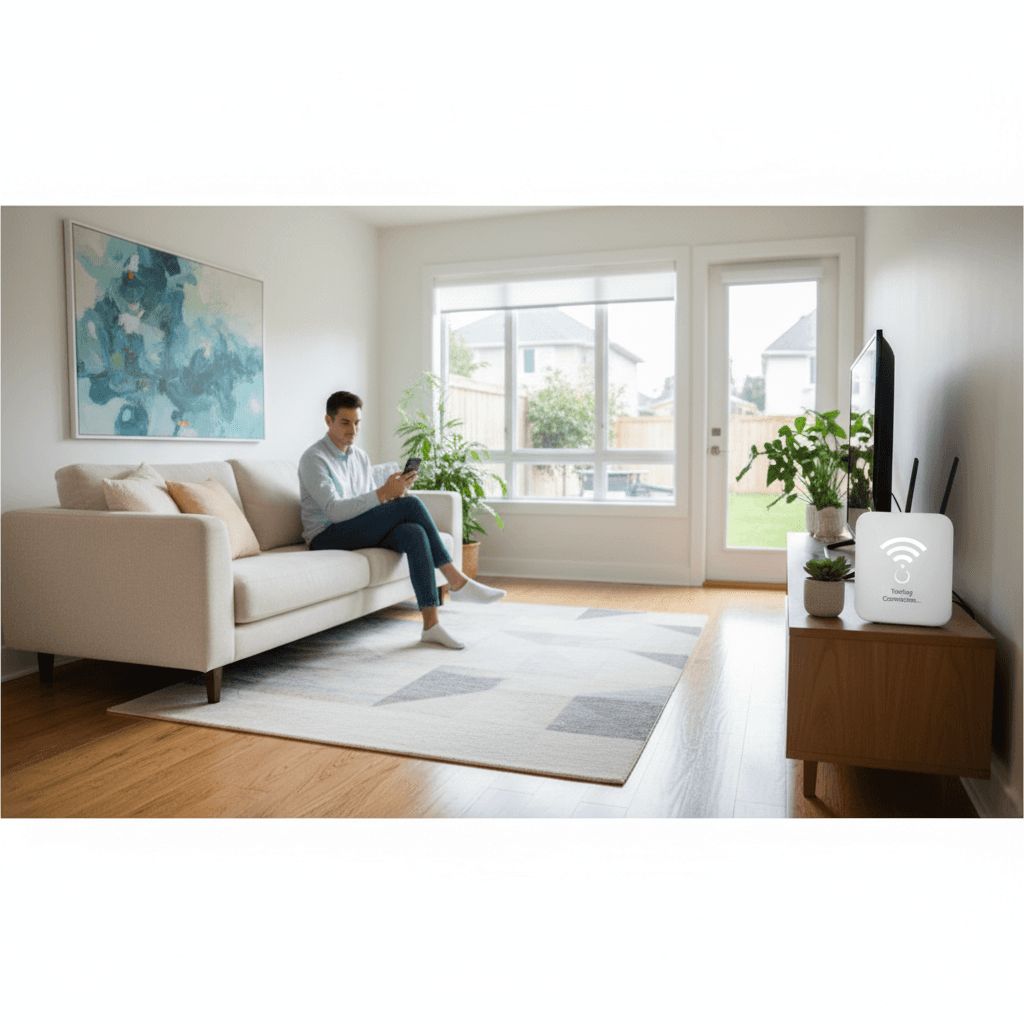
Ideal Physical Placement of Router in a Home
Your router's location dramatically affects Wi-Fi performance. Learn the best placement strategies to maximize coverage and eliminate dead zones.
What's Happening
Your Wi-Fi works great in some rooms but is weak or nonexistent in others. You might have dead zones in bedrooms, slow speeds upstairs, or constant buffering in the backyard. The problem usually isn't your router or internet plan - it's where you placed the router. Good news: moving it to a better spot often solves everything.
Quick Checks (Do These First)
- Where is your router now? In a closet, basement, or corner? These are the worst spots.
- Is it near the ground? Routers on the floor have terrible coverage.
- Is it surrounded by metal or concrete? These materials block Wi-Fi signals.
- Is it in the room where the internet enters your house? That's not always the best location.
Step-by-Step Fixes
Fix 1: Place Your Router in the Center of Your Home
Wi-Fi spreads in all directions, so central placement gives the most even coverage:
- Look at your home's floor plan (or mentally map it out)
- Identify the center point of your main living area
- This is often where a hallway intersects, or in a central living room
- Move your router as close to this center point as your cables allow
- If the modem is in a corner, use a longer ethernet cable to reach the center
- Test Wi-Fi in all rooms after moving it
A centered router reduces dead zones dramatically compared to corner placement.
Fix 2: Elevate Your Router Off the Floor
Height improves signal distribution because Wi-Fi travels better horizontally than through floors:
- Place your router on a shelf, table, or mount it on a wall
- Aim for 4-6 feet off the ground
- This height typically puts it above furniture that blocks signals
- For two-story homes, place it on the upper floor if that's where you use Wi-Fi most
- Or place it on the ceiling of the first floor for balanced coverage
Never put your router on the floor, in a bottom cabinet, or in the basement.
Fix 3: Keep It Away from Signal Blockers
Certain materials and devices interfere with Wi-Fi signals:
- Avoid metal: Keep it away from metal shelves, filing cabinets, and appliances
- Avoid water: Don't place near fish tanks or water heaters
- Avoid thick walls: Concrete, brick, and plaster walls weaken signals significantly
- Avoid other electronics: Keep at least 3 feet from TVs, microwaves, baby monitors, and cordless phones
- Keep it in the open: Don't hide it in a closet, cabinet, or behind the TV
Even moving it 2-3 feet away from interference sources helps.
Fix 4: Optimize for Your Specific Home Layout
Different home types need different strategies:
- Single-story home: Place in the center of the main floor, elevated
- Two-story home: Place on the second floor ceiling or first floor ceiling in a central room
- Long/narrow home: Place halfway down the length rather than at one end
- Split-level home: Place on the middle level
- Home office at one end: Move closer to where you need strong signal most
Consider where you actually use Wi-Fi most and favor those areas.
Fix 5: Adjust Antenna Positioning
If your router has external antennas, positioning matters:
- For single-story homes: Position all antennas vertically (straight up)
- For multi-story homes: Position one antenna horizontally and others vertically
- The horizontal antenna helps with floor-to-floor penetration
- If you have three antennas, try one horizontal and two vertical
- Experiment with angles and test signal strength in problem areas
If Nothing Worked
If moving your router to an ideal location still leaves dead zones, your home might be too large or have too many signal barriers for a single router. Consider mesh Wi-Fi systems, Wi-Fi extenders, or running ethernet cables to access points in distant areas. Sometimes the architecture of your home simply requires multiple devices.
When to Call a Pro
If you can't move your router because the modem location is fixed and cables won't reach better spots, a professional can run ethernet through your walls or attic to connect your router wherever it works best. We can also recommend and install mesh systems for challenging layouts.
Need Professional Help?
If you need help optimizing your home network or running cables to better locations, Geeks in Sneaks provides friendly, on-site tech support in Clearwater, Clearwater Beach, and Dunedin.
Related Topics
Need Professional Help?
If you're still having trouble, our expert technicians can help.
Learn about our network repair serviceMore Router & WiFi Fixes
See all Router & WiFi fixes →Business-Grade vs Consumer Routers for Home Use
Considering a business-grade router for your home? Find out if the premium price delivers real benefits for residential use.
Buying Used or Refurbished Routers: Safe or Risky?
Tempted to save money with a used router? Learn the real security risks and when buying secondhand is safe versus when it's dangerous.
How Long Should a Router Last? When to Replace Yours
Your router is a few years old and you're wondering if it's time to replace it. Learn the typical lifespan and warning signs it's failing.
Gaming Routers: Real Benefits vs Marketing Hype
Wondering if a gaming router is worth the premium price? We separate the real performance benefits from marketing gimmicks.
Renting ISP Equipment vs Buying Your Own: Real Cost Comparison
Paying monthly rental fees for your modem and router? Find out how much you could save by buying your own equipment.
Matching Router Capabilities to Your Internet Speed Tier
Have gigabit internet but not getting those speeds? Your router might be the bottleneck. Learn how to match equipment to your plan.
Dual-Band vs Tri-Band Router: Who Actually Needs It?
Wondering if a tri-band router is worth the extra cost? We'll break down the real differences and help you decide what's right for your home.
How to Fix a Faulty Coax or DSL Line from ISP to Modem
Your internet connection is unreliable and you suspect the cable or phone line coming into your home - here's how to diagnose and fix it.